
Free Europa League Betting Tips: What They Are Worth
 Available in US
The free tip that cost a reader more than any paid one
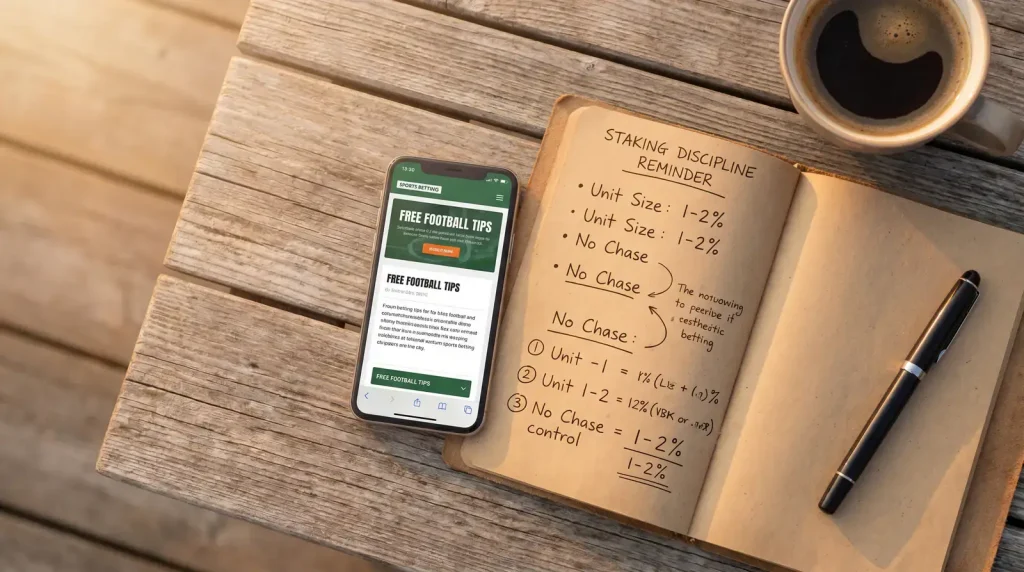
A reader once told me he had never paid a penny for a betting tip in his life and was proud of it. Then he mentioned he had followed a free Thursday accumulator off a popular site every week for a season and was down a meaningful sum. The tips were free. The losses were not. That conversation has stuck with me because it captures the thing people get wrong about free Europa League tips: the price tag on the advice has almost nothing to do with what following it costs you.

I have published free analysis for years and I have also seen the whole spectrum of what “free tips” can mean, from genuinely useful model output to thinly disguised affiliate bait. So let me be straight about value here. A free tip is worth exactly as much as the reasoning behind it and the discipline you apply to it. The best automated 1X2 forecasting in this competition runs at about 62 per cent over the last hundred matches, and a free tip built on that kind of method is worth reading. A free tip designed to get you clicking a bookmaker banner is worth ignoring, no matter how confident it sounds.
This article is not about which free tipsters to follow. It is about how to tell whether a free tip is doing you a favour or quietly emptying your account, and how to use the good ones without letting them make your decisions for you.
Free versus paid, and why the line is blurrier than you think
People assume paid tips must be better, because why else would anyone charge? That instinct is reasonable and mostly wrong. The thing you are paying for with a subscription is usually packaging and the feeling of exclusivity, not a measurable edge. Plenty of paid services run on the same publicly available data and the same modelling techniques as the free ones, and some perform worse because the pressure to justify a fee pushes them toward flashy long-odds picks that look impressive and lose often.
Here is the reality check that grounds all of this. The most predictable Europa League markets sit around the same accuracy whether the tip is free or paid, because they are constrained by the sport itself. Both-teams-to-score and Over/Under 2.5 forecasts both hover near 50 per cent, and correct-score forecasting collapses to around 9 per cent. No subscription changes the underlying difficulty of guessing an exact scoreline. If a paid service claims it has cracked correct score where everyone else lands near nine per cent, the fee is buying you a story, not an edge.

So what does separate good free tips from bad ones? The same thing that separates good paid tips from bad ones: a method you can understand and a record you can check. A free tip that explains why a team is undervalued, that points to form or a key absence or a goal-expectancy mismatch, is giving you something to evaluate. A free tip that just names a selection and a confidence rating out of five stars is giving you a lottery ticket with a nicer font. The price is a distraction. The reasoning is the product.
How free tips actually get made
I want to pull back the curtain, because once you understand how a free tip is produced you stop treating all of them as equal. Broadly there are three sources. The first is pure model output, where a statistical engine ingests form, expected goals and historical results and spits out probabilities, which someone then turns into a written tip. The second is human analysis, where an experienced watcher weighs tactics, team news and motivation. The third, and the largest by volume, is a blend, where a model sets the baseline and a person adjusts for what the numbers cannot see.
The blend is the gold standard when it is done seriously, because the human layer sees what the numbers cannot. Think of how an expert reads a single performance. When UEFA’s technical observers picked out Emiliano Buendía as a standout, they described a quality performance, noting he operated well between the lines, produced good passing and drove the team’s attacking intensity, then crowned it with a fine goal and an assist. A model sees a goal and an assist as two data points; a trained eye sees the between-the-lines movement that created them and understands why it will recur. That is the judgement a serious tip adds on top of the statistics, and it is exactly the layer the bulk-produced free tip lacks.

The trouble is that most free tips you will stumble across online come with none of that judgement and no disclosure of how they were made. They are generated in bulk, sometimes scraped from an algorithm with no human sanity check at all, and published because volume drives traffic and traffic drives affiliate revenue. The tip itself costs nothing to make, which is precisely why so many exist. When you cannot tell which of the three sources a tip came from, assume the cheapest one, because that is the one that scales.
Using free tips without letting them use you
The single most important habit is to treat a tip as one input, never as an instruction. I use other people’s free analysis the way I use a second opinion from a colleague: useful for catching something I missed, dangerous if I outsource my judgement to it. When a free tip and my own read agree, my confidence rises. When they disagree, I dig into why, and often the disagreement teaches me more than the agreement.
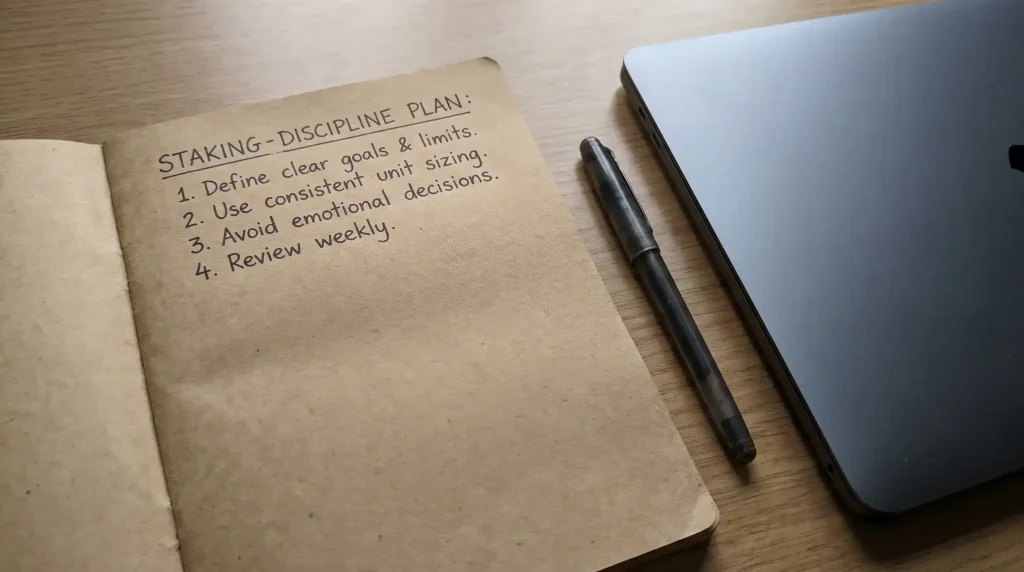
The harder discipline is around money, and this is where free tips do their real damage. Because they cost nothing to follow, it feels like there is no downside to following lots of them, and that is the trap. The global sports-betting market was worth around 100.9 billion dollars in 2024 and is forecast to reach roughly 187 billion by 2030, and that growth is built substantially on people treating low-friction bets as harmless fun. Free tips lower the friction further. The antidote is a fixed staking plan that you apply regardless of how confident a tip sounds, set before you read a single prediction, so that a free Thursday acca cannot quietly scale into a habit your bankroll never agreed to.
If you take one thing from this, let it be that “free” describes the tip and never the outcome. The good free analysts are genuinely worth your time, and learning to spot them is most of the battle. Once you can tell a reasoned tip from affiliate bait, the next step is knowing how to vet the source itself, which I cover in detail in my guide to what makes a Europa League prediction site worth trusting.
Why do tipsters give tips away for free?
Usually because the free tip is the product that sells something else. Affiliate sites earn when you click through and sign up with a bookmaker, so the tip is bait. Subscription services use free tips as a sample to convince you the paid version is worth it. A few publish free analysis simply to build a reputation. None of these motives makes a tip bad, but knowing the incentive helps you read the selection with the right amount of caution.
How do you judge a tipster"s track record?
Look for a record that includes the losing picks, carries dates, and breaks accuracy down by market rather than quoting one flattering blended figure. Check whether the claimed hit rate is realistic against what the sport allows, since correct-score forecasting near 50 per cent simply does not happen. A verifiable, dated, market-by-market record beats any number of testimonials or screenshots of winning weeks.
Articles
Created by the "Europa League Prediction" editorial team.
