
Europa League BTTS Tips: Reading Both-Teams-to-Score
 Available in US
The market that punishes lazy assumptions
Both-teams-to-score looks like the simplest bet in football. Will both sides find the net, yes or no? And that apparent simplicity is exactly why so many people lose money on it, because they bet the reputation of two attacking teams rather than the specifics of the matchup in front of them. I have watched punters back BTTS on a glamour fixture between two famous sides and lose because one of them parked the bus, and the reputation never warned them.
Here is the number that should reset everyone’s expectations. BTTS forecasting in the Europa League runs at roughly 50 per cent accuracy, which means even good analysis lands about as often as a coin flip. That is not a failure of the analysts. It is a statement about how genuinely uncertain the market is, and it means the edge in BTTS is small and hard-won, available only to people who read the specific conditions of a match rather than its billing.

So this is about reading both-teams-to-score properly: what actually drives a yes or a no, which form signals carry real information, and how to hold a realistic view of a market that resists prediction more stubbornly than its simplicity suggests.
What actually drives a BTTS outcome
The honest starting point is that BTTS is a goals market, so anything that affects goal expectancy affects it, but with a specific twist: you need goals at both ends, not just goals in total. A 4-0 thrashing has plenty of goals and still loses a BTTS yes. That distinction is where the careful reading happens, because a high-scoring match is not the same as a both-teams-scoring match, and conflating the two is the most common mistake.
The competition’s scoring environment sets the backdrop. The 2025/26 season produced 2.71 goals per match, a healthy figure that tells you goals are reasonably available across the Europa League, which nudges the base rate for BTTS upward compared with a tighter, lower-scoring competition. But that average hides enormous variation between fixtures, and a season-wide number is the start of a BTTS read rather than the answer. What you actually need is the goal-scoring and goal-conceding profile of each specific side.

The two conditions for a BTTS yes are straightforward to state and harder to assess: each team must have the attacking capacity to score and each must have a defence porous enough to concede. A BTTS yes is most likely when you pair two sides that both score regularly and both leak goals, and least likely when even one side is either toothless in attack or miserly at the back. The single most useful question is therefore not “will there be goals” but “is there a team here likely to keep a clean sheet”, because one clean sheet kills the bet regardless of how many goals the other side scores. Find the match where neither defence can be trusted and neither attack can be ignored, and you have found the conditions BTTS rewards.
The form signals that carry real information
Form is where BTTS prediction either gets sharp or goes wrong, and the difference is in which form you read. Headline results tell you little. What you want are the granular scoring and conceding patterns, ideally over a window long enough to be meaningful but recent enough to reflect the current side. A team that has both scored and conceded in most of its recent matches is a BTTS-friendly profile; a team grinding out clean-sheet wins or losing without scoring is not.
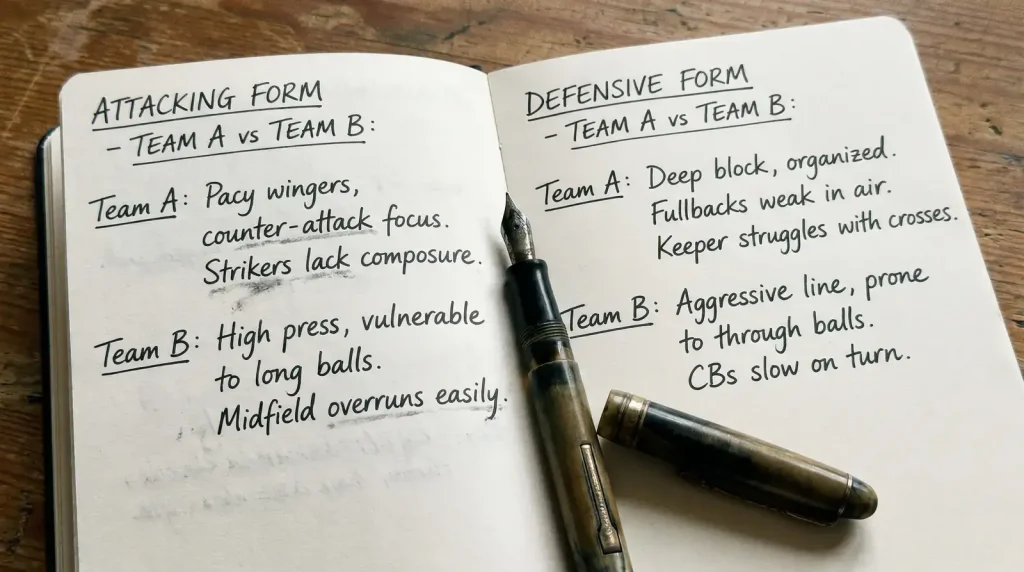
The discipline of building this read properly is exactly what separates serious analysis from guesswork, and it is worth borrowing the standard the best operators hold themselves to. As one editorial panel describes its process, every analysis is created by professional analysts and then checked by a football editorial board for accuracy and consistency, and that second layer of review is what catches the lazy BTTS call that ignores a team’s recent defensive solidity. The check is the point. A model or an analyst can fixate on attacking numbers and forget that the opponent has not conceded in five, and the review catches it.
The signals I weight most heavily are recent clean-sheet frequency for both sides, recent failure-to-score frequency, and any tactical or personnel change that shifts a team’s approach. A side that has tightened defensively after a managerial change, or one missing a key creative player, can flip from a BTTS-yes profile to a BTTS-no profile in a way the season-long averages will lag behind. Reading those shifts before the market fully prices them is where the thin edge in BTTS actually lives, and it requires watching the recent trend rather than the cumulative total.
Holding a realistic view of a coin-flip market
I want to close on expectation management, because the most damaging thing about BTTS is not any single bet but the belief that it is an easy, reliable market. The 50 per cent accuracy figure is not a temporary slump that better analysis will fix; it is roughly where the market sits because goals at both ends in a single match are genuinely close to unpredictable once you account for everything the price already reflects.

What that means in practice is that BTTS should never be the foundation of a betting approach, and certainly not the spine of an accumulator where its coin-flip nature compounds against you with every leg. It is a market to engage with selectively, when a specific matchup presents two leaky defences and two functioning attacks and the price offers genuine value against your read, not a market to bet every Thursday out of habit. The selectivity is the strategy.
The realistic posture is to treat BTTS as a market where you are looking for occasional clear edges rather than a steady stream of winners. When the conditions align and the odds are generous, it is a worthwhile bet; when you are reaching for a reason to back it, that is the signal to leave it alone. BTTS sits right alongside the goals-total market in how it behaves, and the two are best understood together, which is why my breakdown of predicting the Over/Under 2.5 goals line is the natural next read for anyone serious about goal markets.

Is BTTS more predictable than Over/Under 2.5?
They are very close, with both-teams-to-score and Over/Under 2.5 forecasting both sitting around 50 per cent accuracy in the Europa League. Neither is reliably more predictable than the other, because both are goals markets governed by similar underlying uncertainty. The practical difference is what they require: BTTS needs goals at both ends, so a single clean sheet defeats it even in a high-scoring game, whereas Over/Under only cares about the total, making the two markets diverge sharply in lopsided matches.
Which form stats best signal a BTTS bet?
Recent clean-sheet frequency and failure-to-score frequency for both sides carry the most information, ideally over a window recent enough to reflect the current team. You want both sides showing they regularly score and regularly concede, since a BTTS yes needs both attacks to function and both defences to be vulnerable. Watch for tactical or personnel changes that shift a side"s profile, because those move ahead of the season-long averages and are where the thin edge tends to sit.
Articles
Created by the "Europa League Prediction" editorial team.
